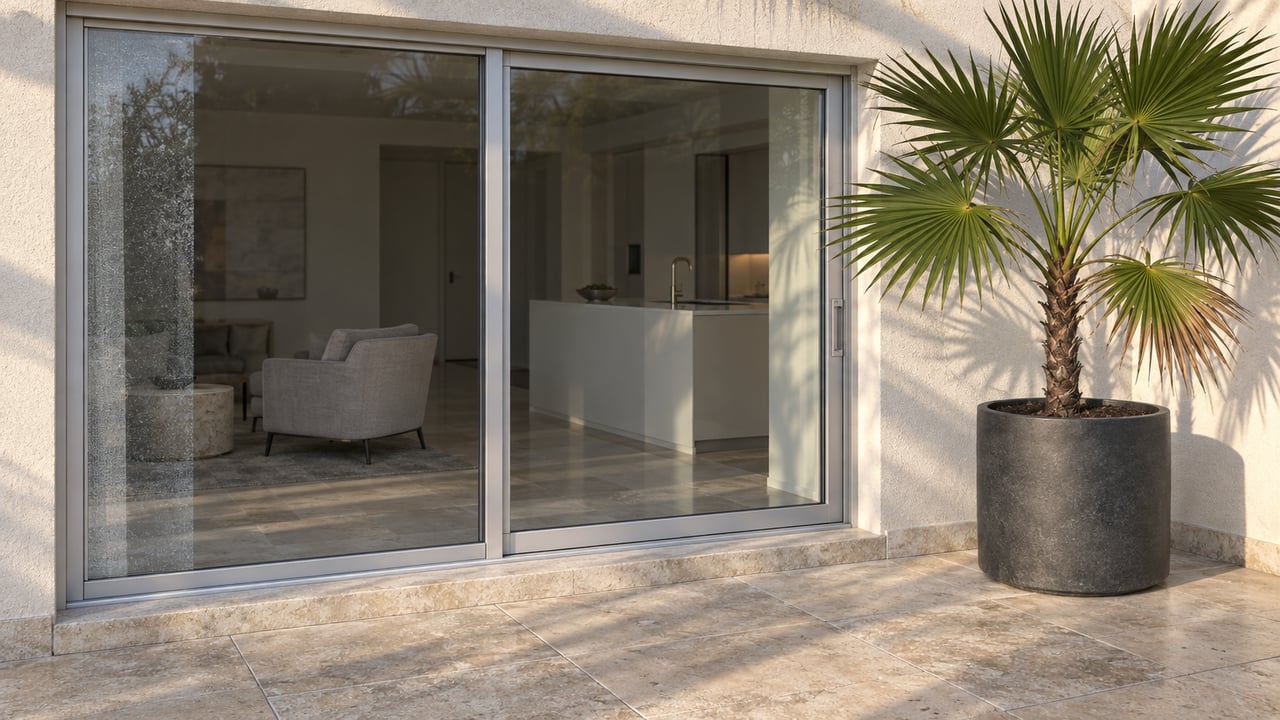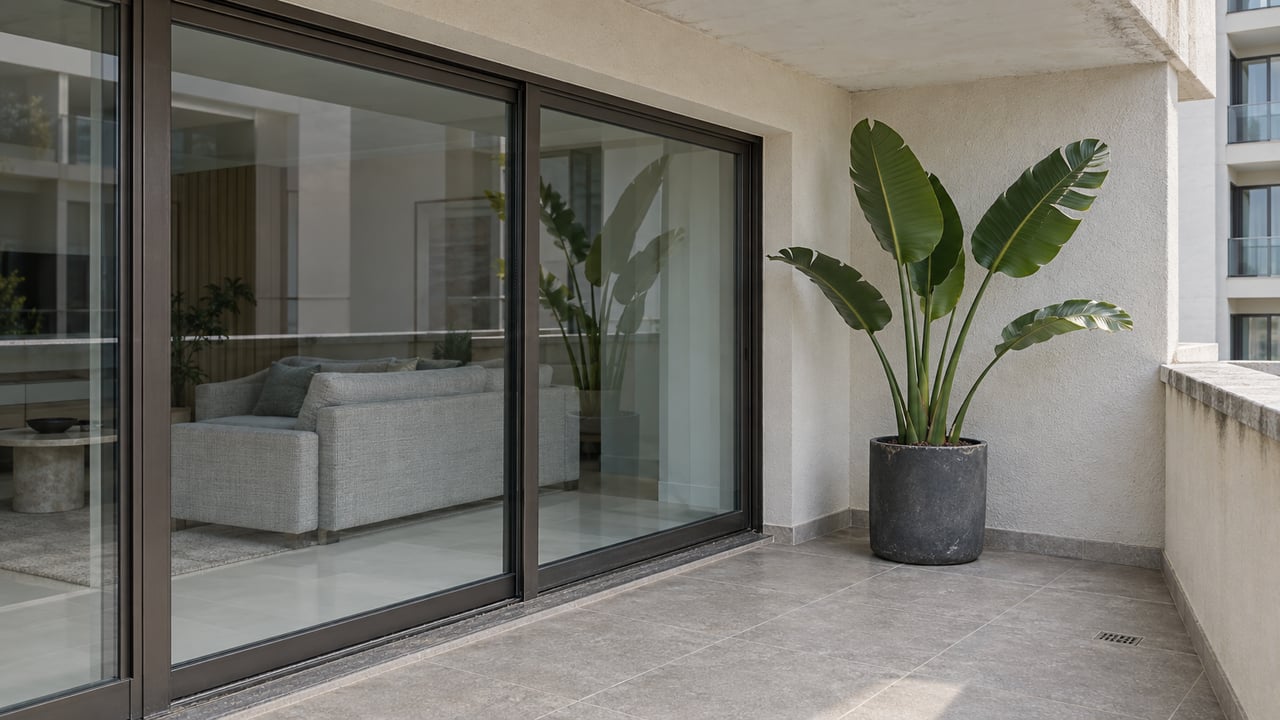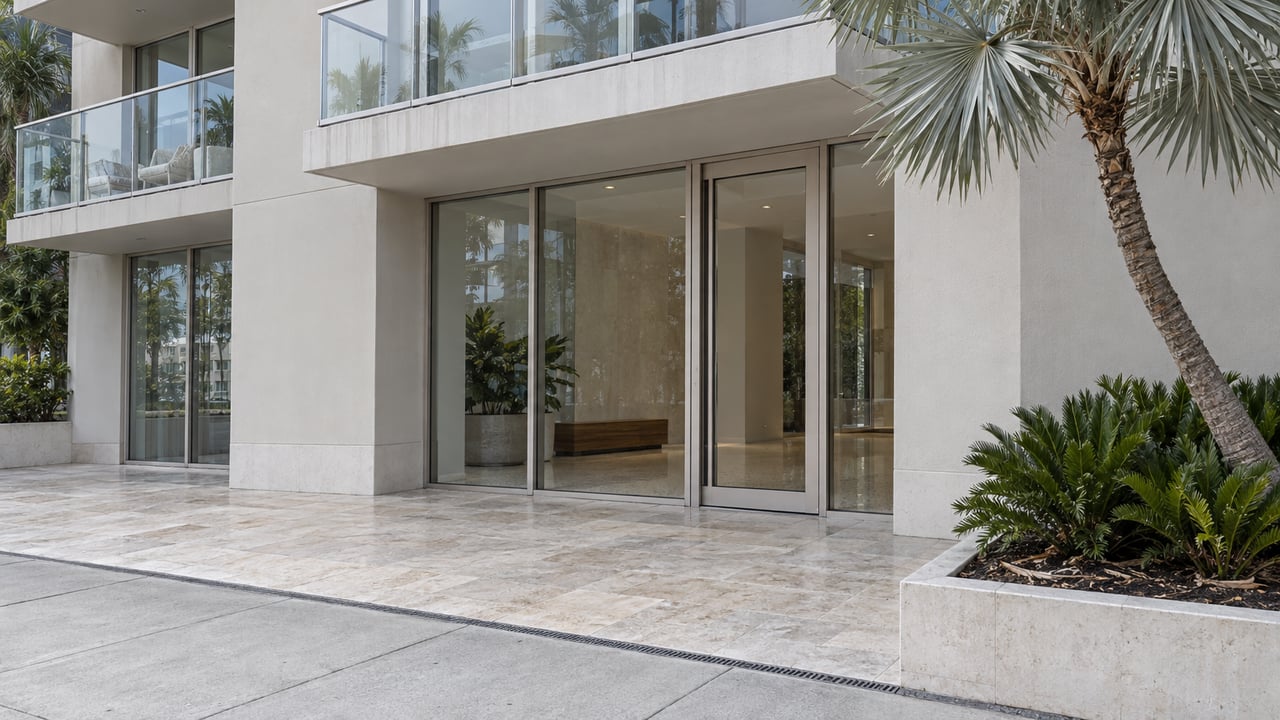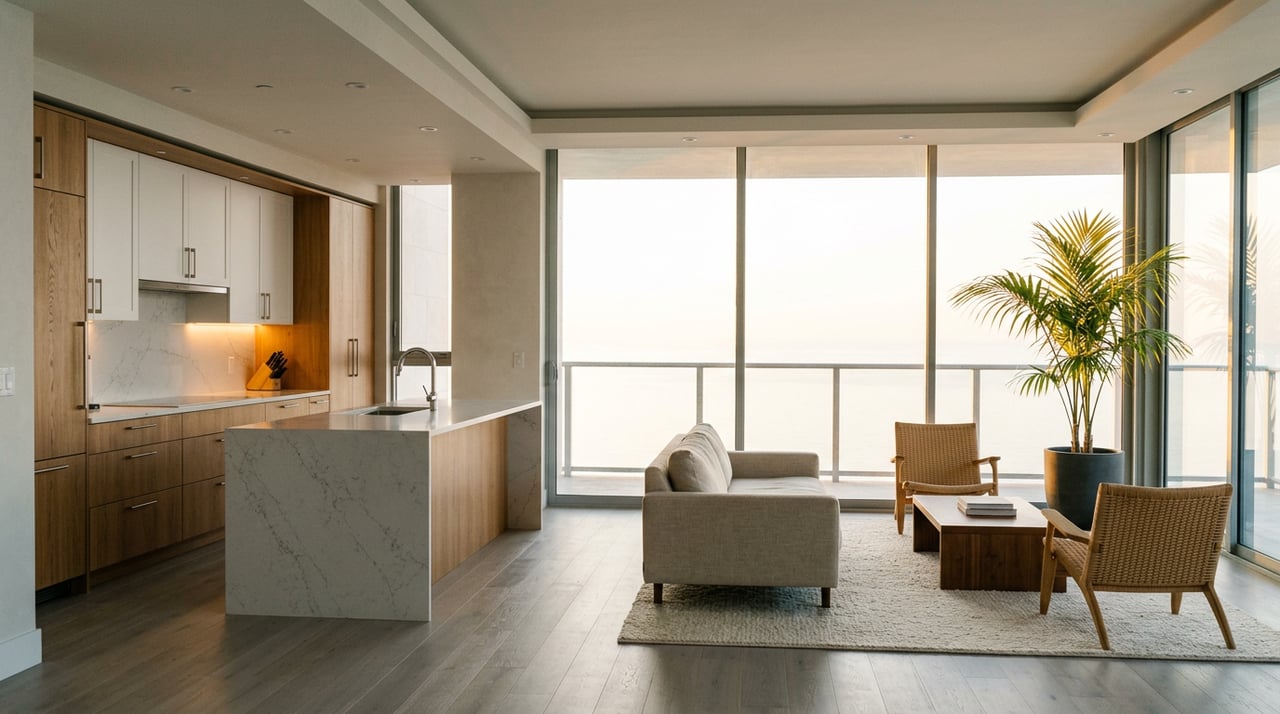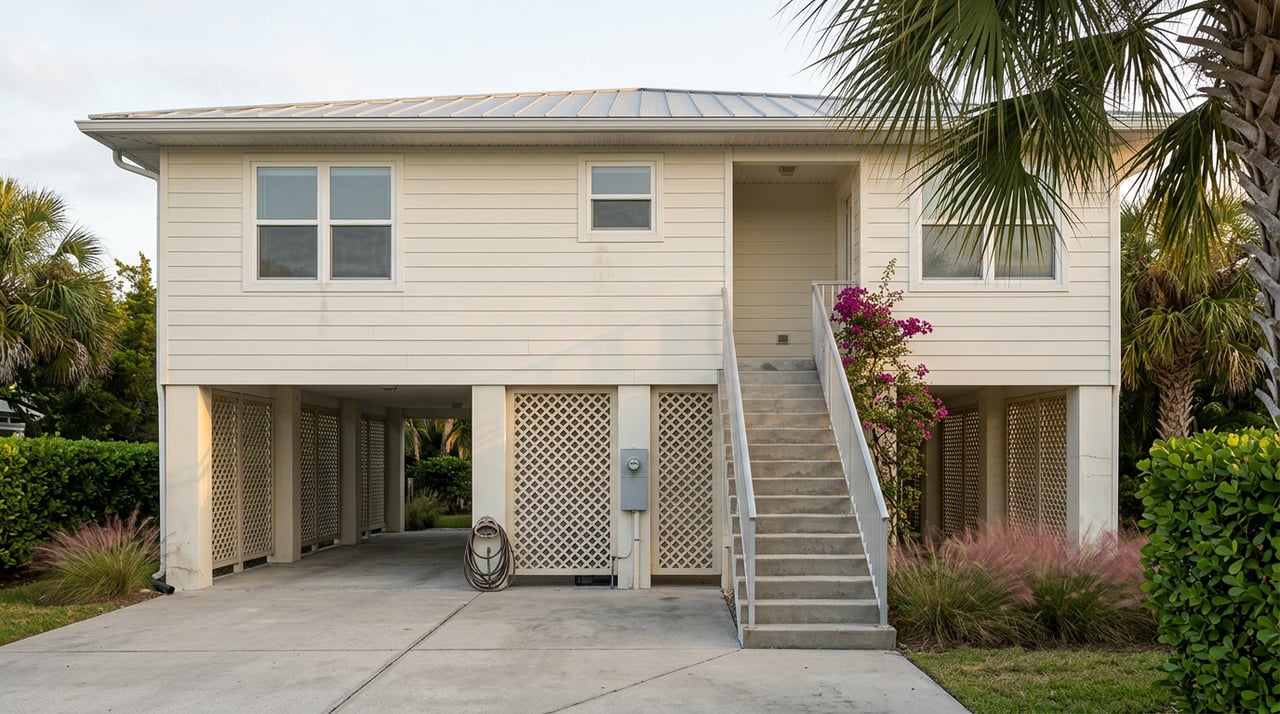
Picture two houses a block apart in Sunset Beach, both built in the 1960s, both flooded during Hurricane Helene in September 2024. Both came onto the market in 2026 within a few weeks of each other, and both list for a price that looks reasonable next to the island's comps. One of them already has a new elevation certificate, a matching flood policy, and a certificate of occupancy on file with the city. The other still has a substantial damage determination letter sitting in a drawer, and no permit yet to touch it.
On paper, these are two similar homes at similar prices. In practice, one of them is finished and insurable today. The other is a construction project with an uncertain budget attached, and that budget is set not by the seller or the buyer but by a single calculation the city ran against FEMA's rulebook. If you're comparing Treasure Island to other Pinellas beach towns right now, that calculation, not the square footage or the finishes, is the number that actually prices the house.
The Line Nobody Prints on the Listing Sheet
Repairs and renovations in Treasure Island can be affected by what the city calls the Substantial Damage Rule. If the cost to repair storm damage equals or exceeds roughly half of the structure's pre-damage market value, the home doesn't just get fixed. It has to be brought up to current flood elevation standards, which in most cases means raising the whole structure. The city's own FAQ on the rule is blunt about the mechanics: homeowners find out where they stand by receiving a letter in the mail, and inspectors make the call using local market rates when an owner applies for permits.
That letter can shape what happens next.
The pain of actually getting there was not abstract. In the months after Helene, one Treasure Island resident described living out of the upper floors of his own house while he waited on permits, telling a local TV crew he had "never had a drop of water in here in 35 years." By late January 2025, the city was sitting on more than 1,900 permit applications with roughly 950 still unresolved, and closed its Community Development Department to the public for two days that week just to work through the backlog.
How the City Moved Its Own Line
What makes Treasure Island's version of this story worth knowing, rather than just another coastal flood regulation explainer, is that the city changed how it applies the rule after Helene and Milton hit within two weeks of each other in the fall of 2024. On December 18, 2024, Treasure Island's City Commission directed staff to wait for owners to apply for permits before making substantial damage determinations. Revolution Florida reports that Treasure Island, St. Pete Beach, and Pass-a-Grille adjusted their post-disaster interpretation of the rule.
The effect showed up fast. Mayor John Doctor told local reporters that weekly permit numbers went from the 60s and 70s into the triple digits after the switch, and by March 2025 the city reported that 85 percent of post-hurricane permits had been issued.
Here's the part that matters for anyone buying in 2026: "85 percent issued" is not the same as "done." Nearly two years after Helene, the city itself is still mid-rebuild. In July 2026, Treasure Island secured $2.5 million in state funding for a new public safety building, since fire rescue and police have worked out of trailers since their original facility was destroyed in the storm. That same month, the city filed permits with the Southwest Florida Water Management District for a rebuilt Public Works campus and a new wastewater pump station at 100 108th Ave, a project Assistant City Manager Gary Volnec called "an important early milestone" that's expected to take about 12 months once construction actually begins. If the city's own infrastructure is still working through its rebuild queue in mid-2026, it's a reasonable bet that a meaningful share of private homes are too.
Two Paths, Two Very Different Budgets
The gap between "repair" and "substantial improvement" isn't cosmetic. It's the difference between a kitchen remodel and a construction loan.
| Under the threshold (repair) | At or over the threshold (substantial improvement) | |
|---|---|---|
| What triggers it | Repair cost stays below roughly 50% of the structure's pre-damage value | Repair or improvement cost meets or exceeds that threshold |
| Typical scope | Drywall, flooring, mechanical systems replaced at existing elevation | Entire structure raised to current flood elevation, rebuilt to current code |
| Cost | Standard renovation pricing | Structural lift alone commonly runs $150,000 to $250,000; a full elevation-scope rebuild on a 2,000 to 3,000 square foot home typically lands between $600,000 and $1.2 million |
| Insurance outcome | Existing flood rating largely unchanged | New elevation certificate, generally a materially better flood rate going forward |
| Timeline | Standard permit queue | Engineering, lift, and full-code construction, typically well over a year |
A buyer weighing two similarly priced Treasure Island homes needs to know which column each one falls into before making an offer, not after closing.
The Denominator Everyone Fights Over
Because the threshold is a percentage, the value used as the denominator decides everything. Contractors who specialize in flood-zone permitting across the county routinely see tax-assessed structure values sit 20 to 40 percent below what a private appraisal would show.
For a buyer, the seller's disclosed repair history is worth reviewing before making an offer.
What the Median Price Is Actually Hiding
Look at Treasure Island's headline numbers and the obvious story is a softening market. Median list price ran about $699,000 in May 2026 and about $672,000 by July 2026, roughly 15 percent below where it stood in July 2025. Price per square foot came in around $513 in July 2026, down about 6 percent year over year.
If this were a simple demand problem, more supply chasing fewer buyers, you'd expect days on market to climb alongside the price drop. It didn't. Homes for sale in July 2026 spent a median of 118 days on the market, essentially unchanged from July 2025. Falling prices with flat time-to-sell is the signature of a market where the mix of inventory changed, not one where buyers walked away.
That mix shift lines up with the substantial-damage story. Homes still working through repair limbo, or selling essentially for land value, pull the median down. Meanwhile, in Sunset Beach specifically, MLS data through June 27, 2026 showed a median sale price near $1.1 million, but on only a handful of closings, with homes averaging 127 days on market and roughly 18 months of supply on hand, a combination that reads less like strong demand and more like a thin, stalled micro-market where finished, code-compliant inventory rarely trades and commands a premium when it does. Two very different stories, both true, both hiding inside the same citywide median.
The Insurance Bill Waiting on the Other Side
Every site in Treasure Island falls inside a wind-borne debris zone rated for 150 mph winds under Wind Exposure D, per the 2023 Florida Building Code, 8th Edition, which the city adopted effective December 31, 2023. Barrier island flood premiums reflect that exposure: VE-zone flood insurance on Treasure Island, St. Pete Beach, and Madeira Beach commonly runs $3,000 or more per year on top of a standard homeowners policy. NerdWallet reports that Pinellas County's high NFIP Community Rating helps offset some of that, with residents eligible for up to a 40 percent discount on flood premiums, one of the more useful, underused breaks specific to this county.
One more date worth flagging for anyone weighing a fixer or a substantial-improvement project right now: the Florida Building Code's 9th Edition takes effect December 31, 2026. That changeover is one more reason to get the substantial damage status and permit timeline nailed down before making an offer, not after.
A Few Questions Worth Asking Before You Offer
How do I find out if a specific home already has a substantial damage determination? Ask the seller directly for the letter, or contact the city's Community Development Department.
Does a repaired-but-not-raised home mean I should walk away? Not automatically. It may be a real savings upfront, but weigh that against a flood premium that likely won't improve until the structure is eventually raised, whether by you or a future owner.
Is the rule applied the same way in every Pinellas beach city? No. Treasure Island, St. Pete Beach, and Pass-a-Grille each adjusted their post-Helene interpretation somewhat differently, so a house a few blocks away in a neighboring jurisdiction with identical numbers on paper could be treated differently.
If you're looking at a specific Treasure Island address and want help pulling the substantial damage history, the permit status, and what it actually means for your insurance and your budget, that's the kind of digging Shore2Bay does before you ever write an offer. And if you're the one holding a home that's already been through this process and wondering what it's worth now that it's resolved, start with a home valuation and we'll talk through what the number actually reflects.
This article is general information, not legal, tax or financial advice. Consult a qualified professional about your situation.